
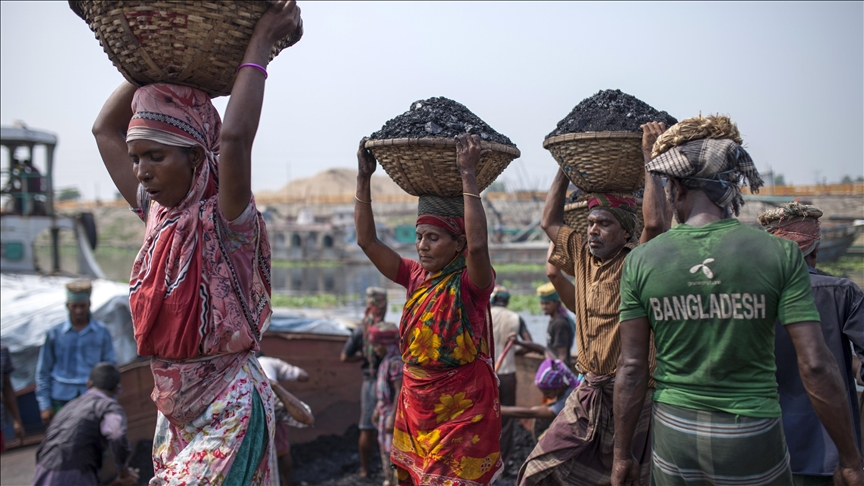
At dawn in Gazipur, when garment factory lights flicker on, and the streets begin to stir, thousands of workers make their way through narrow lanes with lunch boxes in hand and hope that today will be kinder than yesterday. The workers’ lives are built on effort, resilience, and the quiet expectation that tomorrow might offer something better. Yet for many workers, that promise remains fragile. The question before the country is no longer whether workers deserve more, but whether Bangladesh is prepared to redefine the relationship between labour, business, and the state through a new social contract.
A social contract is not a law alone. It is the shared belief that if workers commit their skills and their time, society will protect their dignity, security, and future. In Bangladesh, that understanding has been stretched thin. Despite decades of industrial expansion and integration into global markets, many workers still face accidents, illnesses, or job loss. Wages rarely keep pace with living costs. Informal work remains the norm. Safety improvements, while real, remain uneven. This is not simply a labour issue but a question of national values.
The importance of a new social contract becomes clearer when we see through the lens of Environmental, Social, and Governance (ESG) responsibility. While environmental concerns often dominate headlines and governance occupies boardrooms, the “social” pillar rests directly on the lived experience of workers. Global investors, international brands, and development partners increasingly recognise that labour standards are not peripheral issues but central indicators of sustainable development. For Bangladesh, the global supply chains heavily depend on human labour. Thus, the social dimension of ESG is not abstract; it is deeply personal. Workers in Bangladesh have already paid a high price for progress. Tragedies such as Rana Plaza forced the country and the world to confront uncomfortable truths about working conditions, accountability, and the human cost of production. Since then, improvements in building safety, inspections, and compliance have been substantial, especially in the Ready-Made Garments (RMG) sector. Yet safety alone does not constitute dignity. True social responsibility requires wages that sustain families, working hours that respect health, contracts that provide security, and voices that are heard rather than managed.
A new social contract would require a shift in mindset. Instead of viewing labour merely as a cost to be minimised, it must be understood as a partner in value creation. When workers feel protected and valued, everyone benefits. Productivity rises, loyalty deepens, and innovation follows. But this does not happen by accident. Employers must go beyond basic compliance and invest in their workers’ wellbeing. Governments must act before crises hit – not after workers have already paid the price.
Fair pay is a prerequisite for the new social contract. Many workers are squeezed between rising living costs and stagnant pay. Minimum wage adjustments often happen late and rarely reflect actual living expenses. A new social contract would acknowledge that a living wage is not a privilege but a foundation of social stability. This does not imply ignoring business realities, but it demands collaborative wage-setting mechanisms that reflect both productivity and human need.
Employment guarantee is equally critical. The economy is vastly dominated by informal work, leaving millions without contracts, health coverage, or pensions. These workers power transport systems, farms, households, and small enterprises, yet remain invisible in policy frameworks. Integrating informal workers into social protection systems is one of the greatest challenges as well as one of the greatest opportunities for Bangladesh’s development. Without it, inequality will continue to widen, undermining social cohesion.
Workplace safety, though improved in export-oriented industries, remains dangerously uneven in many other sectors. On construction sites, in shipbreaking yards, brick kilns, and on the roads, workers still face serious risks every single day. Too often, injuries that could have been prevented are brushed aside as accidents when in reality they reflect failures of management, weak oversight, and a lack of care. A real social contract would not treat safety rules as paperwork or an inconvenience, but as a basic moral duty owed to every person who shows up for work.
Education and skills development are also part of this new agreement. A society that invests in lifelong learning strengthens its economy. Workers who can upgrade their skills are not merely employable but are empowered. Therefore, workers need continuous opportunities to adapt as automation and digitalisation reshape industries.
Business leaders have a major role to play in making this new social contract real. Bangladeshi companies are now more connected to global markets than ever, working with international buyers and investors who are paying close attention to labour standards and transparency. This pressure, if handled well, can become a powerful force for positive change. Companies that invest in worker training, fair wages, safe conditions, and employee representation do not merely meet standards but build resilience. Such companies are better positioned to attract responsible investment, retain skilled labour, and navigate global market shifts.
Besides, regulatory enforcement must be consistent and insulated from political influence to ensure credible governance and make ESG functional. Labour laws should be clear, accessible, and enforceable. Workers must have safe avenues to organise, negotiate, and seek redress.
The greatest challenge, however, for the new social contract is trust. Years of broken promises and unmet expectations have left workers deeply sceptical of institutions. Rebuilding trust requires transparency, participation, and shared responsibility. Workers must have a seat at the table when decisions affect their livelihoods. Social dialogue between government, employers, and workers should not be a procedural formality. It should be the heartbeat of a functioning social contract.
Global markets are shifting. Consumers are more conscious. Investors are more demanding. Young workers are more informed. The country can either hold to an outdated model that extracts value from labour without fully honouring it. Or it can embrace a transformation aligned with the social core of ESG and the promise of fairness, sustainability, and shared prosperity.
In the early mornings and long evenings, as workers move through the rhythms of their days, they are not asking for miracles. They are asking for a fair chance. The readiness of Bangladesh to offer that chance will define not only the wellbeing of its workers, but the character of its development for generations to come.



































RECENT COMMENTS