
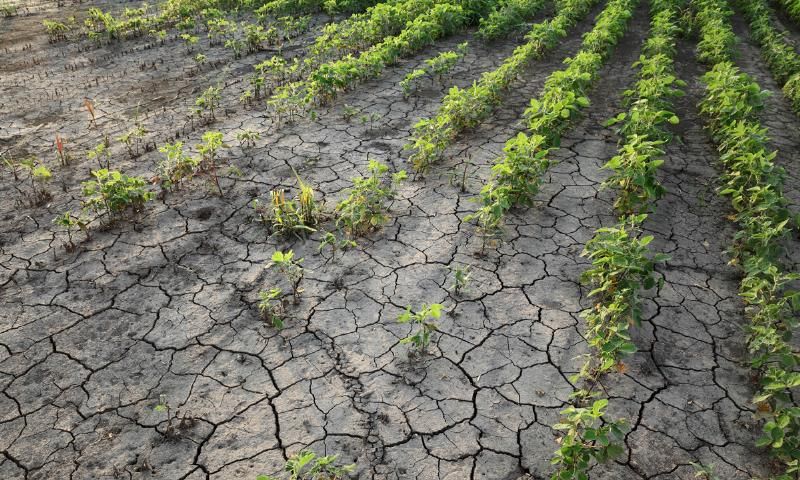
One of the central issues raised at the COP30 conference was adaptation financing. In the context of Bangladesh, agriculture emerges as the sector demanding the highest priority in adaptation financing.
Agriculture is a climate-sensitive sector that plays a role in sustaining a large number of families in Bangladesh. The sector stands as a key pillar of Bangladesh’s economy. In the financial year 2023-24, the sector contributed 11.55% of the GDP and 44.42% of the employment. Due to its susceptibility to climate variability, climate change has a direct and indirect impact on food security by lowering agricultural productivity and reducing the nutritional quality of food. The sector also contributes to anthropogenic greenhouse gas emissions. The sector is highly intensified as it produces up to three rice crops annually, which produces a significant amount of methane, a major greenhouse gas. In the base year 2022, the AFOLU (agriculture, forestry, and other land use) sector accounted for 37.83% of total GHG emissions, of which agriculture and livestock contributed to 17.04% and 18.37% of total emissions, respectively.
However, Bangladesh’s vulnerability to climate risk is far greater than its contribution to global GHG emissions. The country ranks 7th in the climate risk index with a Climate Risk Index score of 28.33. Different regions of Bangladesh face different climate change phenomena such as flood, drought, cyclone, excess rainfall, salinity intrusion, sea level rise, and high temperature. Climate-related disasters caused the loss of over 250,000 hectares of harvestable land and 850,000 households. Moreover, studies show that crop failure due to the loss of agricultural land caused a 30% spike in rice prices between 2014 and 2021. A report by The World Bank stated that one-third of Bangladesh’s agricultural GDP can be lost owing to extreme events due to climate change.
To combat the challenges related to climate change and food security in Bangladesh, the government has taken various actions. Various national plans for adaptation and mitigation for climate change-related impacts have been drafted. One of the major policy documents is the Nationally Determined Contributions (NDC). Bangladesh published its 3rd NDC in September 2025, before COP30. NDC 3.0 was preceded by Intended NDC in 2015 and NDC 2.0 in 2021. The document outlines the climate action plans and emission reduction targets of Bangladesh. NDCs are one of the major products of the Paris Agreement in 2015.
Bangladesh provides a transparent and measurable contribution to Global Stocktake (GST1) through NDC 3.0, with advancing adaptation plans, strengthening mitigation ambition, enhancing transparency, etc. It integrates adaptation measures across agriculture, water, health, forestry, disaster management, and urban development to reduce vulnerability of communities, ecosystems, and critical infrastructure. The document has set some targets to reduce carbon emissions in sectors, including AFOLU. A total of 11.46% reduction in emissions has been set in the AFOLU sector by 2035, among which 3.46% reduction is under unconditional targets, and 8.00% is under conditional targets (subject to international support – grant, concessional loan, carbon trading/financing). In the AFOLU sector, the target for the agriculture sector is a 10.13% reduction (3.08% under unconditional and 7.06% under the conditional scenario) in GHG emissions.
The national policies and strategies advocate for adopting a high rate of climate-smart agriculture through technological advancement like IoT for precision agriculture, training of farmers for large scalability of climate-smart irrigation techniques, extension services to farmers for awareness in daily farming choices, etc. In agriculture, actions include scaling up Alternate Wetting and Drying (AWD) in rice cultivation – bringing around 30% of rice cultivation under AWD irrigation, expanding short-duration rice varieties, promoting precision fertilizer application, etc., have been highlighted in NDC 3.0. For livestock, the focus is on feed management to improve animal diets and manure management through biogas, vermicompost, and biochar solutions.
In its efforts to take up adaptation actions, the Government of Bangladesh (GoB) has undertaken research to develop crop varieties resilient to drought, cold, waterlogging, pests, diseases, and salinity (e.g., drought-tolerant BRRI Dhan 42; flood-tolerant BRRI Dhan 51; stress-tolerant BARI Gom 25, etc.). NDC has also identified agriculture as one of the major thematic sectors aligning with the National Adaptation Plan (NAP) 2023-2050. The adaptation priorities include augmentation of surface water for irrigation and multipurpose use, development of agrofood processing industries based on climate-sensitive crop zoning, strengthening and development of early warning systems, and data management for agriculture, etc.
To implement the adaptation priorities, Bangladesh’s strong call for international support in terms of financing at COP30 is critical. The adaptation investment requirement is around USD 12-14 billion by 2035. This is a huge amount for a country emitting less than 0.5% of the global GHG emissions. While a small part of the need will be financed through domestic funding, the scale of impacts of climate change on Bangladesh, especially the agriculture sector, requires international solidarity. Without expanded opportunities for technology transfer, dedicated regional cooperation like South-South cooperation, capacity building, enhanced Green Climate Fund disbursement, Bangladesh’s ambitious adaptation plan risks remaining on paper.
In this case, the COP30 negotiators’ call for triple climate adaptation financing gives a glimmer of hope for countries like Bangladesh. However, the promise must translate into action. A persistent gap is observed between approved and disbursed climate finance across South Asia. A report by Climate Watch states that South Asian countries only managed to disburse 51% of allocated adaptation finance between 2017-2021. This underscores the need for streamlined mechanisms. For Bangladesh’s agriculture sector that requires immediate investments in climate-smart irrigation systems, stress-tolerant crop varieties, early warning systems, and agro-processing infrastructure, delayed financing means continued crop failures, rising food prices, and deepening vulnerability. The success of NDC 3.0 ultimately depends on whether the promises made in Belém translate into concrete financial and technical support for the nations on the frontlines of the climate crisis.


















































RECENT COMMENTS