
When the 30th session of the COP30 concluded on November 22, 2025, in Belém, Brazil, many left the Amazon-flanked venue with a sense that the summit had once again delivered more promise than payoff. On paper, the so-called Belém Package, a bundle of 29 decisions agreed by 195 Parties, seemed to signal a renewed commitment to climate action. But dig deeper, one sees glaring omissions – no binding roadmap to phase out fossil fuels, no firm plan to stop deforestation, and climate finance pledges that remain vague at best.
From the perspective of many vulnerable countries, among them Bangladesh, COP30 underscores just how creaking the traditional COP model has become. Consensus politics, once hailed as the global vehicle for climate cooperation, seems increasingly ill-suited to the urgency of our planet’s crisis. If the world continues to lean solely on this old mechanism, the gap between climate ambition and climate reality will only widen.
What COP30 Delivered, and What It Left Unresolved
COP30 was not entirely barren of achievements. The summit adopted the Belém Package, committing, in principle, to a “tripling” of climate adaptation finance by 2035. For countries such as Bangladesh, which is already experiencing climate-induced floods, cyclones, salinity intrusion, and river erosion, this signal of increased support for adaptation could provide a lifeline. A new Just Transition Mechanism (JTM) was formalized that also sees, for the first time under the UN climate framework, technical assistance and capacity building pledged as well as support for a just transition to low-carbon economies. The global “Global Murão” spirit, invoking collective action, suggests that COP negotiators intend to shift from mere symbolic pledges to more implementation-focused cooperation. There was also renewed emphasis on nature, land, forests, agriculture, and inclusive climate action that centers communities and vulnerable populations.
Yet, the summit’s two highest-stakes issues, fossil fuel phaseout and deforestation, were effectively sidelined. Despite strong pressure from more than 80 countries to adopt a roadmap for phasing out coal, oil, and gas, powerful fossil-fuel producing countries blocked any binding language. Similarly, though the Amazon rainforest formed a potent backdrop to the summit, the deal lacked a credible global commitment to halt and reverse deforestation. In short, COP30 ended with many of the structural drivers of climate change, fossil fuels, and deforestation, untouched.
Moreover, the promise to triple adaptation finance remains vague – no baseline was defined, the timeline stretches to 2035, and there is no clarity yet on who will foot the bill or how. For countries already beleaguered by climate shocks, such an open-ended commitment may feel too little, too late.
Why This Matters for Bangladesh
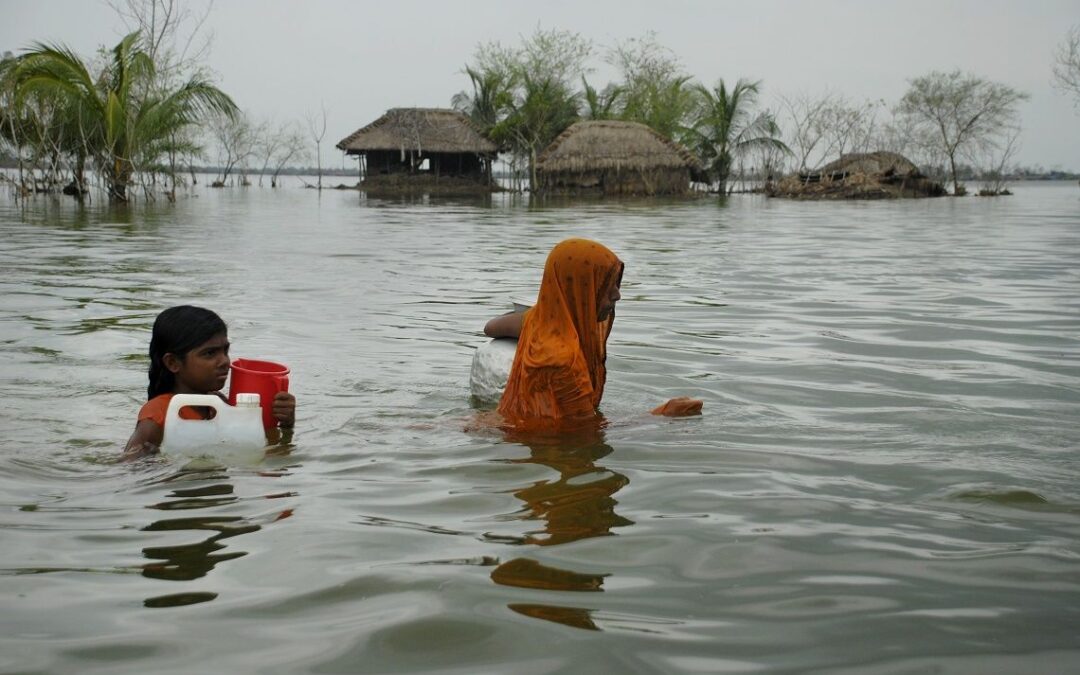
For a low-lying, deltaic country like Bangladesh, with a high climate exposure factor, COP30’s outcome is a bitter pill. On the one hand, the adjusted focus on climate finance, adaptation, and just transitions provides some glimmer of hope. As floods and cyclones get worse, and shorelines retreat, stronger adaptation finance can translate into better flood-protection infrastructure, early warning systems for disasters, climate-resilient agriculture, and social support for vulnerable communities. If the JTM were paired with actual resources, it could provide a means to transition away from climate-vulnerable livelihoods toward more resilient economic activities, especially in coastal areas and flood plains.
But what this implies is that unless the global community addresses the root causes, fossil fuel dependency, and ecosystem destruction, we are only rearranging deck chairs on a sinking ship. Bangladesh’s vulnerability does not end with adaptation – long-term survivability depends on a deep reduction in global emissions and ecosystem protection worldwide. Without a fossil-fuel phase-out or forest-protection guarantees, the greenhouse gas burden will continue rising, sea levels will keep climbing, and extreme weather will worsen.
The Limits of Consensus, the Promise of Climate Clubs
The stalemate at COP30 reveals the Achilles heel of the traditional COP model – unanimity. As long as fossil-fuel producing countries can veto any binding commitment, the process will at best produce bland compromises. From this perspective, expecting meaningful global transformation through this mechanism feels like relying on miracles.
However, an alternate path may now be emerging, one that does not rely on global consensus but on flexible alliances. Some countries from COP30 have already indicated they will pursue fossil-fuel transition and forest-protection roadmaps outside the formal UN process, via “climate clubs” or coalitions of the willing. What this means is that progress might come not from universal consensus, but from a network of countries ready to act together.
For Bangladesh, this brings both opportunities and challenges. A climate club approach might offer a more direct path to decarbonization, technology transfer, and financing – particularly through partnered action with developing countries that suffer from the climate. But it also comes with risks. Will these alliances prioritize countries of economic or strategic weight, to the exclusion of countries like Bangladesh? And what if “club climate action” ends up exacerbating just the sort of global inequalities that it is trying to overcome?
If we are to benefit, then Bangladesh, in collaboration with regional partners, must proactively engage with these emerging coalitions. We need to ensure that climate clubs are inclusive and align with the interests of vulnerable nations. Otherwise, the shift in global governance may leave us behind.
From COP30 to Bangladesh’s Climate Strategy: What Should We Do?
COP30 shows that climate politics is evolving, but slowly. For Bangladesh, the summit should be a wake-up call – adaptation financing pledges are welcome, but cannot substitute for mitigation; consensus-driven diplomacy may stall when the stakes are highest; and new forms of cooperation, flexible, coalition-based, action-oriented, may produce more real change.
First, policymakers and civil society in Bangladesh should treat the COP30 adaptation pledge as a starting gun. They must engage immediately with multilateral funds, humanitarian agencies, and development partners to shape how adaptation financing will reach vulnerable communities. There is a narrow but real opportunity to secure funds for resilient infrastructure, climate-smart agriculture, and disaster management systems – investments that can save lives and livelihoods.
Second, Bangladesh must adopt a dual-track climate strategy, strengthen adaptation and social protection on one hand, while pursuing decarbonization and integration with emerging climate-club frameworks on the other. Our export-oriented industries, manufacturing, RMG, and energy, should be pulled into a low-carbon transition early, leveraging the rising global demand for greener supply chains.
Third, at the regional and global level, Bangladesh must join forces with other climate-vulnerable countries to pressure climate clubs to prioritize equity and inclusion. These should not be new venues for climate colonialism, but spaces for technology transfer, financial assistance, and shared adaptation-mitigation action planning. The country’s diplomacy should embody this necessity.
Finally, Bangladesh should continue building its internal capacities in climate governance, climate-disaster risk management, renewable energy deployment, and social protection. Unless we build domestic resilience and adaptive capacity, external promises, even genuine ones, will not suffice.



















































RECENT COMMENTS